Premature failure of diamond polishing pads is a recurring concern in the stone fabrication industry. For overseas importers, distributors, and workshop owners, understanding the interaction between pad materials, production processes, and in-field operating conditions is essential to extend pad life and protect polishing results on granite, marble, and concrete surfaces. Drawing on more than 30 years of export-oriented manufacturing experience, our observations identify the most common root causes and practical mitigations.
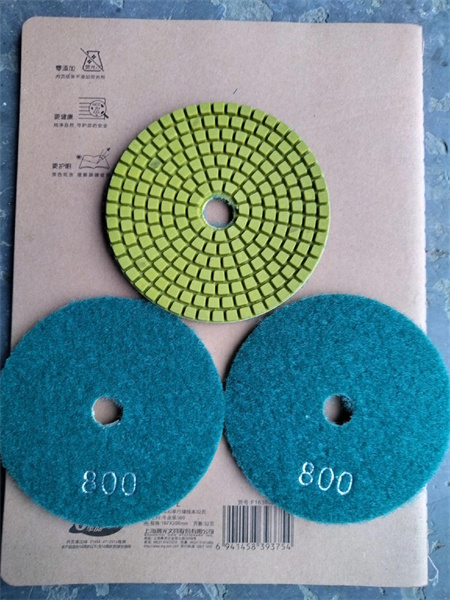
Material selection and bond formulation are primary determinants of pad lifespan. Resin bond pads are favored for achieving high gloss on softer stones and for wet polishing applications; metal bond pads offer aggressive cut rates and extended wear on hard granite; hybrid bonds aim to balance cutting speed and surface refinement. The bond formula must be tuned to the abrasive grade and target material: a mismatched bond—too hard or too soft relative to the stone—will either glaze prematurely or disintegrate under load. Long-term formula development and OEM capability enable tailoring of resin, metal, or hybrid bonds to specific fabrication needs and grit systems.
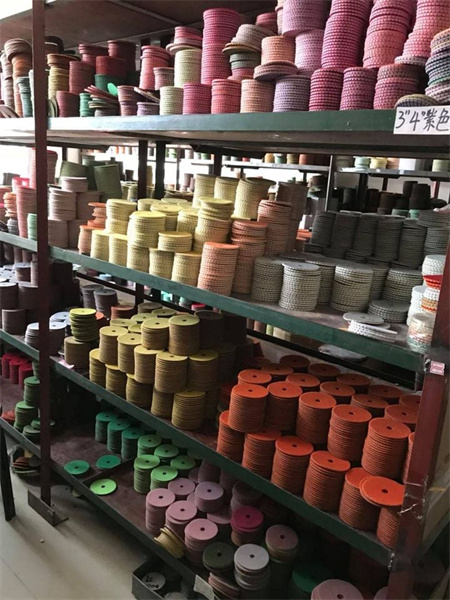
Synthetic diamond quality grades and their distribution within a pad greatly influence performance consistency. Higher-quality, well-graded synthetic diamonds maintain cutting efficiency and reduce pull-out, while uneven particle size distribution accelerates wear and vibration. Controlled grit systems, from coarse grits for initial shaping to ultrafine grits for finishing, must be matched to both the bond type and intended application—granite polishing demands different sequences and pad aggressiveness than marble finishing or concrete polishing.
Production processes directly affect mechanical integrity. Hot pressing and cold pressing each have advantages: hot pressing can improve densification and bonding in certain resin and hybrid formulas, while cold pressing followed by precise curing cycles can produce consistent porosity and resilience. Proper curing is critical to stabilize the bond and reduce volatile retention that can lead to premature breakdown during operation. Our factory production capacity and standardized process controls support tight tolerance across batches, minimizing variability that commonly causes early failure in field use.
Backing systems also matter for durability and usability. Velcro and hook-and-loop backings provide convenient pad changes for workshops, but inadequate adhesion between the backing and pad body can produce delamination under heat and lateral stress. Reinforced backing options and controlled bonding processes reduce the risk of separation during aggressive polishing sequences.
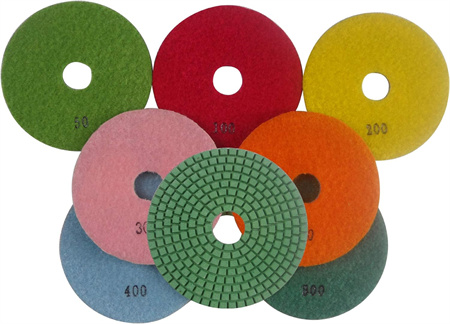
Performance factors such as cutting speed, gloss level, lifespan, and heat resistance must be balanced. Excessive RPM, too much downward pressure, or insufficient cooling will raise pad temperatures, accelerating bond degradation and diamond pull-out. For optimal lifespan, follow recommended RPM ranges, use adequate water flow for wet polishing, and progress through proper grit sequences. Quality control standards during manufacturing—hardness testing, diamond concentration verification, and batch-to-batch consistency checks—ensure pads meet specified performance metrics before export.
Export packaging practices also influence end-user experience. Proper moisture-barrier packaging, shock-resistant inner packing, and clear labeling of grit sequence and recommended operating parameters reduce damage in transit and prevent confusion that can lead to misuse. Our international export experience emphasizes documentation and protective packaging to preserve pad integrity during long supply chains.
Preventing premature pad failure requires attention from both manufacturer and end user: precise bond and diamond formulation, controlled production methods, robust backing systems, and correct on-site operation. When these elements are managed together, diamond polishing pads deliver predictable cutting speed, sustained gloss, and reliable lifespan for the stone fabrication industry.